I stopped by the Grand Lodge of Iowa's Masonic Library in Cedar Rapids the other day. There's a new exhibit that Assistant Librarian Bill Krueger told me about: Iowa Masonry and World War I. The exhibit tells about the role of Iowans in the War. The exhibit includes some WW I weapons (including a Big Bertha artillery shell!) but focuses more of masonry and Iowa masons who served. In addition, there is an exhibit of WW I posters.
I took a few pictures of the exhibit below. The exhibit will be open through June 2015 and is located on the 2nd floor.
Showing posts with label research. Show all posts
Showing posts with label research. Show all posts
Saturday, December 6, 2014

Friday, June 29, 2012
Symbolism of the Ashlars: Borglum's View

My first attempt at Masonic research was an analysis of the Rough and Perfect Ashlars, two common symbols found in many Iowa Masonic Lodges. My purpose in writing the paper was to describe different interpretations of these Masonic symbols in part to encourage a broader interpretation. In my research, I found references to the three branches of the federal government, social capital, and even comasonry. Rather than focus on a persuasive thesis as to which interpretation is best, I hoped to merely describe unique ways to view these symbols. As a new Freemason, I can't say that I succeeded in that attempt, but I did add to my own understanding.
Many of the ten interpretations I wrote about have been published here on my blog, but I left out the one posted below: Brother Gutzon Borglum's interpretation. My travels this month to Utah inspired me to dig out some of my old photos from previous trips and I discovered several from a visit to Mount Rushmore years ago, and so I was reminded of this great man and what he had to say about the symbolism of the Ashlars:
Over three million people visited Mount Rushmore in 2009, a number greater than the total population of the state of Iowa. (National Park Service) This popular, iconic American landmark is itself memorialized on everything from T-shirts to shot glasses. Gutzon Borglum began work on the massive presidential memorial in 1927. His son, Lincoln Borglum, assumed primary responsibility for the project after his father died in 1941. As many members of the Craft know, both father and son were Freemasons. Gutzon Borglum was Worshipful Master of Howard Lodge No. 35 in New York City. Lincoln Borglum, named after his father’s favorite President Abraham Lincoln, was a member of Battle River Lodge No. 92 of Hermosa, South Dakota. (Leazer, n.p.)
The Borglum view of the symbolism of the rough and perfect ashlar stems from the artist’s insight into his art. Masonic author Carl Claudy writes about this in Introduction to Freemasonry:
"The famous sculptor and ardent Freemason, Gutzon Borglum, asked how he carved stone into beautiful statues, once said, "It is very simple. I merely knock away with hammer and chisel the stone I do not need and the statue is there - it was there all the time." In the Great Light we read: "The kingdom of heaven is within you." We are also there taught that man is made in the image of God. As Brother Borglum has so beautifully said, images are made by a process of taking away. The perfection is already within. All that is required is to remove the roughness, the excrescences, "divesting our hearts and consciences of all the vices and superfluities of life" to show forth the perfect man and Mason within." (Pietre-Stones: Review of Freemasonry)
This view of the rough and perfect ashlars compliments other interpretations. Borglum’s analysis of the human condition highlights our capacity for communion with God, and indeed, focuses on the purpose of our life here: to draw closer to Him. Through the practice and principles of Freemasonry, we build on that qualitative human characteristic and apply the work to ourselves for the improvement of all.
Friday, December 30, 2011
The greatest library in the world
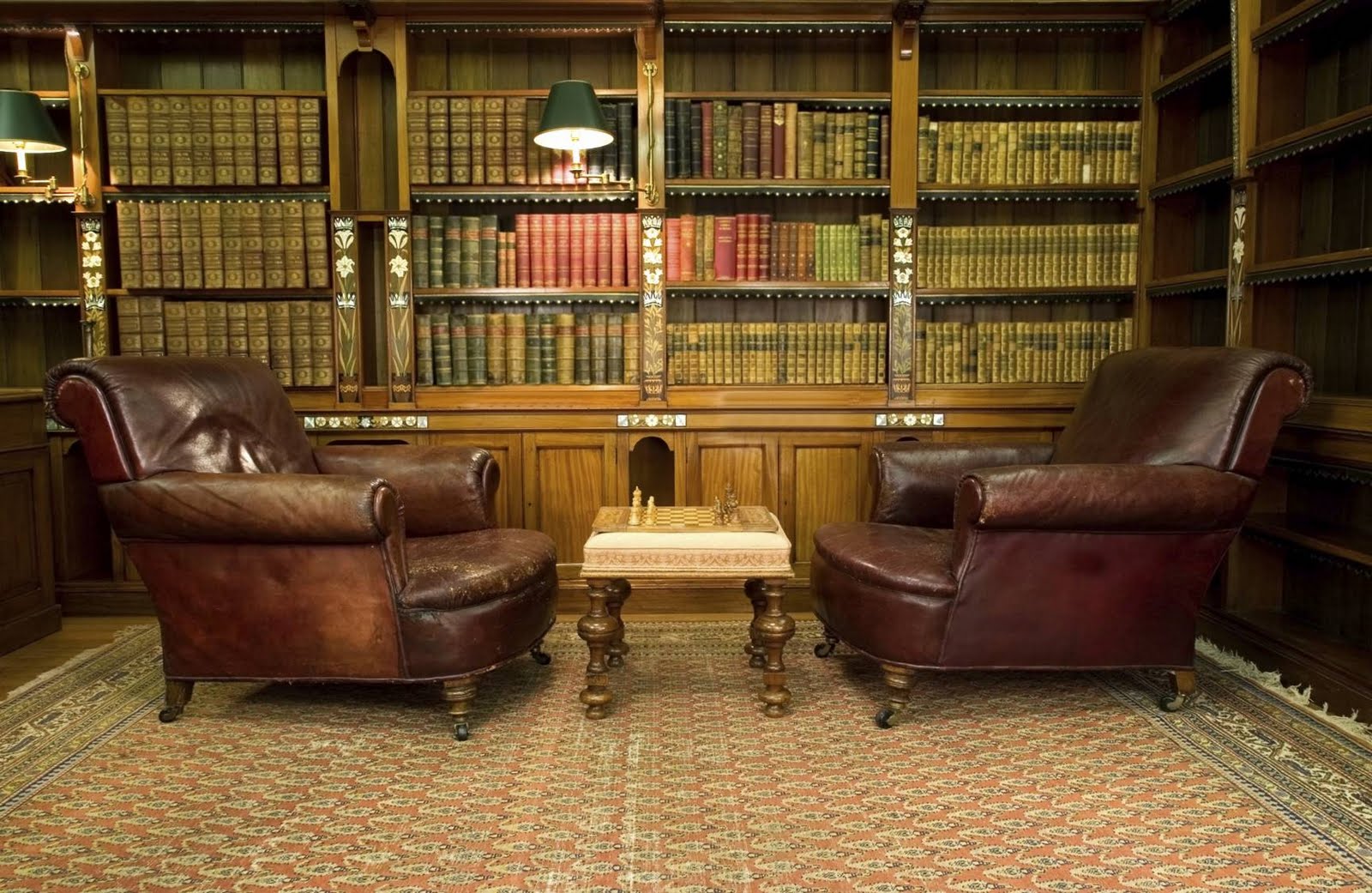
I traveled to the Grand Lodge of Iowa’s Masonic Library in Cedar Rapids yesterday to finish research on my symbolism paper- I posted a few pictures below in a slide show. I completed the body of the paper some time ago, but I needed to clarify several confusing bibliographic citations I had in my notes; I guess I should have listened to my sophomore English teacher and used index cards to keep track of everything!
The Iowa Masonic Library is a joy to visit and a pleasure in which to research. The assistant librarian, Bill Kreuger, was helpful as always. I’m amazed that this library, one of best Masonic Libraries in the world, is so accessible to Iowa Masons. And it’s difficult to describe the significance of the Index Rerum. The Index Rerum is the only index of Masonic periodicals of its kind, anywhere in the world. Librarians at the Masonic Library began indexing articles in Masonic periodicals sometime around 1905, according to Tim Anderson, Deputy Grand Secretary. The result is a massive card catalog which indexes every imaginable Masonic topic. I found almost 100 index cards on the topic of ashlars alone.
I’m a bit of a geek when it comes to libraries: I worked in one as a teenager, I nearly lived in one when I coached debate, and now I serve as a trustee on the board of my local public library. I suppose only a teacher would enjoy spending a vacation day researching at a library, but I think anyone with an interest in Freemasonry would find their time spent visiting the Iowa Masonic Library worthwhile.
For those interested, part of my research paper is posted at the Masonic Research network in the article submissions area under downloads. The title is Symbolism of the Ashlars: Three Interpretations.
Tuesday, July 26, 2011
Dr. Gordon Wood, Brown University

Dr. Wood is a professor at Brown University and a Pulitzer prize winning author of a book on the American Revolution. He is the featured lecturer this week for our seminar at Mount Vernon. Stephen Bullock, author of Revolutionary Brotherhood, was his student.
Saturday, January 29, 2011
New reading material

I have some new, and some old, reading material on my shelf this week. I’m finishing the introduction in my paper on the symbolism of the Ashlar in Freemasonry and I requested two books from the Iowa Masonic Library to help me fill in the weak areas. I’ve borrowed the first title before- The Craft and its Symbols: Opening the Door to Masonic Symbolism by Allen E. Roberts. Actually, I think this may be the third time I’ve borrowed it! I like this book a lot. Roberts summarizes common and not so common symbols in a clear, concise way that doesn’t patronize the reader. It’s a very short book, and yet it does a great job covering a comprehensive number of Masonic symbols. And at least one Masonic librarian agrees with me: Roberts’ book is on the list of suggested titles from a recent article on the Supreme Council’s website.
A second book I borrowed from the Grand Lodge of Iowa A.F. & A.M. Masonic Library is Mark Tabbert’s American Freemasons: Three Centuries of Building Communities. This book comes highly recommended as well. I haven’t started it yet, but I’m curious especially to read this author because of his Iowa Masonic roots. I attended the Des Moines Scottish Rite’s Blue Lodge Breakfast last week and we were treated to a short video about George Washington and the National Masonic Memorial, of which Tabbert is the Director of Collections. Shane Harshbarger, the DSM Scottish Rite’s Master of Kadosh introduced the video by telling us that Tabbert was raised in Iowa. I did a little more research and found out that indeed, he was raised in Malta Lodge #318 in Burlington.
The third book I have waiting for me is The Complete Idiot’s Guide to Freemasonry by S. Brent Morris. I just picked this up at Barnes and Noble with a gift card I received at Christmas.
Now if I can just put the books down long enough to get that intro finished!
Thursday, October 21, 2010
Ashlars and the V.O.T.S.L.
Another section from my paper on the Symbolism of the Ashlars:
Ashalrs and the value of the V.O.T.S.L.
Stephen Dafoe tackles this view of the Ashlars in The Masonic Dictionary. He tells us that we need a consistent standard by which to measure our actions and thoughts. This standard is similar to the role of the Perfect Ashlar in Operative Masonry. Masons used the Perfect Ashlar to test the accuracy of their tools. The accuracy of a tool declines with use and the workman must recalibrate his tools if he is to produce consistent work. In Speculative Masonry, we too must use accurate tools by which to measure our actions and thoughts. Dafoe explains:
The Perfect Ashlar is for the more expert Craftsman to try and adjust his jewels on. In ancient times, with crude tools that would not even be used in this age, workmen of great skill and experience produced material for the construction of the Temple having such perfection that each piece fitted perfectly into its place without adjustment or correction. Time was not one of the essential factors; perfection was the goal. To keep this state of perfection in absolute balance, a standard must have been set whereby the workmen could constantly test their tools to know that continued wear and use had not changed the measurements; even in the slightest degree… In Masonry, we are the workmen, whether we be active or inactive, workers or drones. What are our "jewels", our most prized possession? If we have absorbed any of the teachings Masonry, the building of character and a Christian way of life are two of the many jewels that should constantly be before us. And in the building of that state of perfection to which we attain, what Perfect Ashlar have we that we might go to and "try" the tools with which we have been working, to know that they are still of fine quality and in perfect condition for the job that lies before us.
Robert Macoy goes further:
The Perfect Ashlar is a stone of a true square, which can only be tried by the square and compasses. This represents the mind of a man at the close of life, after a well-regulated career of piety and virtue, which can only be tried by the square of God’s Word, and the compasses of an approving conscience.
While American Lodge rooms typically contain the Holy Bible, this symbolic view of the Ashlars does not exclude other sacred texts. Religious liberty is a proud tradition of Freemasonry and Lodges use the V.O.T.S.L. appropriate to their brothers. The emphasis here is not on the particular example of the Word but instead on the role it serves in a Freemason’s life. Dafoe continues:
In every Masonic Lodge there rests on the Altar in the centre of the room the V.O.T.S.L. It is the solid foundation upon which Masonry in our lives is built. It never changes. Civilizations may come and go, but the Book of Books remains the same, adaptable to all conditions and manner of men, in good times and bad, in peace or war, a guide for mankind. How often do we consult this Guide to try and adjust the jewels which are ours and which may need to be altered to get them back to that state of perfection which we as Masons should endeavor at all times to hold as our standard way of life?
As Freemasons, is our exposure to the “Book of Books” limited to readings we hear in Lodge, and if so, how are we calibrating our working tools?
Tuesday, October 12, 2010
Ashlar as a prediciton of Co-masonry?

Another possible interpretation of the Ashlar is that it is a prediction of co-masonry. This is perhaps the most controversial interpretation of the Ashlar I came across. Again, comments are always welcome.
VIII The Ashlar as a prediction of Co-masonry
This view considers the shape of the Ashlar to represent the future acceptance of women into the Masonic Fraternity. First, however, a brief examination of the standard rectangular form of the Ashlar is necessary for understanding this interpretation.
One of the most common shapes the Ashlar takes is that of a three-dimensional rectangular block, or oblong. The Short Talk Bulletin published by the Masonic Service Association describes an Ashlar as “…more than twice as long as wide and high.” This is the common silhouette we see in most American Lodges. Mackey’s Encyclopedia of Freemasonry cites evidence from the great English architect Christopher Wren to support this representation: “In Sir Christopher Wren's use of "ashlar" the stone had a dimension of 1 x 1 x 2 feet; and many building records, some of them very old, mention similar dimensions.” Jeremy Cross is perhaps most responsible for this generally accepted shape here in the U.S. In 1819, Cross published a book illustrating common Masonic symbols. This book, the True Masonic Chart or Hieroglyphic Monitor, gained wide approval and Cross’s interpretation of the shape of the Ashlars became the “…standard design for American Masonic symbolism,” according to the Scottish Rite Masonic Museum of our National Heritage. The Museum published a review of Masonic symbols in American decorative arts. In this review, the topic concerns the shape of the Ashlars:
…a uniform American system of symbolism was first established in published form by Jeremy Cross in his Masonic Chart, published in 1819. Earlier publications like Prestons’ Illustrations of Freemasonry and Thomas Smith Webb’s Freemason Monitor, had explained the meanings of the symbols but provided no description or illustration of their designs. Webb did not approve of the use of emblems to illustrate Masonic works, reflecting the greater secretiveness of the early fraternity. Cross made an important contribution to Masonic symbolism by including actual illustrations of the symbols…
The oblong is not the only shape one may find of the Ashlar. A cube is often used and in France, the pierre-cubique is common. A pierre-cubique is a cube with the top of a pyramid. The pierre-cubique with an axe embedded in its top is an older example of the diversity of shapes one may find. There is a lively debate in scholarly Masonic journals regarding the historically correct shape of the Ashlar. My purpose here is simply to present a brief glimpse of the topic as an introduction to this symbolic interpretation of the Ashlars.
As a prediction of co-masonry, we are assuming the Ashlar is in the form of an oblong, or a double cube. Henry Parsell explains the basic argument for this interpretation:
Curiously enough, the Ashlars ordinarily in use in Lodges are not Cubic Stones, but are more usually Double Cubes, or nearly so. The symbolism of this is prophetic, for the Double Cube represents the future state when twin-souls shall be united…
Parsell claims that the oblong Ashlar is actually two separate cubes, joined together. Each cube is symbolic of the male and the female. Joining the two represents reunification of the sexes into a more unified whole. Parsell continues:
…it is an indication that at a not so distant period Woman will be admitted to our Lodges and be given the same courteous consideration and instruction in its Symbolism as she is now more and more receiving in the business and political world of today.
Parsell’s interpretation is not widely accepted, however the uniqueness of his view merits consideration, especially as an example of the diversity of this allegedly basic Masonic symbol.
Sunday, October 3, 2010
Symbolism of the Ashlars: consistency

Another way to look at the Rough and Perfect Ashlar is as a symbol of consistent, moral action in public and private life. Freemasons should not have one standard for the Lodge and another for the world. This view builds on the research done by Edmund Dring and published in AQC. For a brief summary of Dring's work, see my previous entry titled Bowling Alone.
V Consistency in Public and Private Life
Dring’s research leads to another, complimentary interpretation of the Rough and the Perfect Ashlar. He demonstrated that the “perpendashlar” is a bonding stone passing through an inner and an outer wall. To the extent that it passes through both sides of the wall, two sides of this stone are exposed to view. The Master Mason utilizes his working tools to square the faces of the stone so that both are true: the face of the stone on the inside of the wall is just as true as the face which is visible to the outside world. Hunt applies this analysis to Speculative Masonry:
It has two faces to be exposed, and both must be absolutely upright. It does not have one standard for the world and another for the home; the same face, square and true, is presented both to the world and the Lodge, and it teaches that we should not have one code of morals for one place and another for another, but that right is the same wherever we are and under whatever circumstance we may be placed.
As Perfect Ashlars, our behavior is consistent with the principles of Masonry throughout all aspects of our life. We must apply the same spiritual, mental, and physical standards to our daily life as we do in the Fraternity. Moreover, our code of morals should be consistent in both public and in private. Both faces of the Perfect Ashlar must be square and true. Christopher Hodapp summarizes the significance of this view in his book, Freemasons for Dummies:
Freemasons believe that there is still such a thing as honor, and that a man has a responsibility to behave honorably in everything he does. It teaches members the principles of personal decency and personal responsibility. It hopes to inspire them to have charity and good will toward all mankind, and to translate principles and convictions into actions.
Thursday, September 23, 2010
The Simplistic View

Here is another of the ten interpretations from my paper on the symbolism of the Rough and the Perfect Ashlar.
II Simplistic View
This symbolic understanding considers the Rough Ashlar as representing the Entered Apprentice, new to the Craft and deficient in both knowledge and experience; the Perfect Ashlar represents the Master Mason with years in the Fraternity. I categorize this view as simplistic to the extent that the criterion used to measure the transformation of a man’s mental and spiritual nature is the quantity of years he has been a Mason rather than the quality of his Masonic life.
In some states, Lodges display stones to represent visually a Rough and a Perfect Ashlar. While meditation on these stones would assist the comprehension of an individual's transformation, the simplistic view merely sees it this way: that’s the candidate when he comes in and this is what he should look like when he’s finished.
Monday, September 20, 2010
Bowling Alone?

This is another part of the paper I'm writing on the symbolism of the Rough and Perfect Ashlars:
IV Individual or Group
Speculative Masonry utilizes the tools and materials of Operative Masons to teach a system of morality veiled in allegory and illustrated by symbols. The fourth interpretation of the Rough and the Perfect Ashlar draws on the operative use of these stones. In building a wall, common practice involved fabricating two adjacent walls and bonding them together for superior strength. Special stones ran lengthwise through the width of both walls bonding the two separate structures together. Dr. John S. Nagy describes these bond stones:
It’s a Building term used by Stonemasons to describe Perfect Ashlars used to connect the Inner and Outer layers of walls that create Buildings. Stone walls are usually built with two layers of Perfect Ashlar, an inner and an outer, and may or may not have rubble sandwiched between them. Either way, these two walls require connecter Stones to stabilize the Structure thus Built. Perpend Stones are those Stones whose lengths allow them to extend from the outside of the outer wall to the inside of the inner wall thus showing their smooth faces on the construct’s inner and outer surfaces.
These bond stones are Perfect Ashlars. The original form of the term “Perfect Ashlar” provides additional support for this analysis. Brother Edmund H. Dring studied the morphology of Perfect Ashlar and published his research in the Transactions of the Quatuor Coronati Lodge No. 2076. Dring concluded that the word “perpendashlar” was the original form of the term perfect ashlar. According to the Oxford English Dictionary, “per” originates from Latin meaning “through” and “pannus,” the original form of “pend” according to Dring, also originates from Latin meaning “cloth or wall.” In supporting his claims, Dring cites data from architectural dictionaries from the Middle Ages and other language reference works. Later Masonic scholars concur with Dring’s argument saying “…he was the first to put forward what is, in all probability, the correct explanation of the term “Perfect Ashlar.”
Dring’s work reinforces the function served by the individual Freemason in strengthening the Craft. As a Rough Ashlar, a Freemason is merely an individual component of a wall, but as a Perfect Ashlar, he fortifies the Fraternity. The Perfect Ashlar passes entirely through both walls as a “binder for other stones,” as Charles C. Hunt put it. Speculative Masonry provides the tools for an individual man to improve himself, with the blessings of the Great Architect of the Universe, and thus enhance the spiritual and moral structures of today’s society. He is no longer just an individual; taking the form of a Perfect Ashlar he serves a fundamental mission within the group.
There is a relationship between the Rough and Perfect Ashlars in the stone wall built by an Operative Mason: the integrity of the wall is partially based on the connections between the stones, with the Perfect Ashlars providing a binding force. An analogous form is seen in a social network. The individual nodes within the network inherently draw value depending on the relationships between one another. Social scientists use the term social capital to describe this value. Robert Putnam, a professor of political science at Harvard University, described the decline of social capital in a 1995 article in the Journal of Democracy. At its most basic level, social capital simply means that relationships matter. Putnam proposes that face-to-face social interactions build the trust necessary for a strong community. He writes:
Whereas physical capital refers to physical objects and human capital refers to the properties of individuals, social capital refers to connections among individuals – social networks and the norms of reciprocity and trustworthiness that arise from them. In that sense social capital is closely related to what some have called “civic virtue.” The difference is that “social capital” calls attention to the fact that civic virtue is most powerful when embedded in a sense network of reciprocal social relations. A society of many virtuous but isolated individuals is not necessarily rich in social capital.
Putnam goes on to claim that declining membership in civic organizations, like Freemasonry, reduces our social interactions and threatens to impact political institutions.
Masonry provides us with a wide range of opportunities for social discourse with a diverse group of men. Moreover, the principles of our Fraternity focus on many of the concerns highlighted in Putnam’s research: lack of civic engagement, social isolation, and declining support for government institutions. As a man progresses in Masonry and participates in all that our Brotherhood offers, he transforms himself from an isolated member of society into a binding force: he becomes a Perfect Ashlar and enriches the civic life of our nation.
Wednesday, September 8, 2010
Symbolism of the Ashlars: Standard Interpretation

I’m working on a Masonic paper on the symbolism of the Rough and Perfect Ashlars, the first part of which is below. I'll review ten interpretations of these basic symbols including Albert Pike's view of the people and the State, the Ashlars and Robert Putnam's concept of social capital, numerology, and even a prediction of co-masonry! The first view is what I’ve labeled the standard interpretation. Comments are welcome!
STANDARD INTERPRETATION
The Ashlars represent the spiritual transformation of a man from his beginning in Masonry as an uneducated Entered Apprentice to a Master Mason who has lived a life consistent with the teachings of Masonry. Dr. Joseph Fort Newton, a minister, brother, and Iowan, explains that Rough Ashlars become Perfect Ashlars through the practices and principles of freemasonry. The comparison is between the stages of development unique to an individual Mason; Rough and Perfect are not relative terms distinguishing one man from another.
How does this individual transformation occur? William Preston in his Lectures writes that the change is bought about by a virtuous education, our own endeavors, and the blessing of God. Again, the emphasis is on the individual Mason improving himself rather than on a comparison to others. The Mason figuratively chips away at the rough edges of his moral character through the practices and principles of Masonry.
While this standard interpretation considers the Rough Ashlar to be man in a “rude and imperfect state by nature,” according to Coil’s Masonic Encyclopedia, it’s important not to take such a figurative reference too far. Lawrence reminds us that “we do not admit absolutely rough and unhewn material into our lodges. Our working tools are not the pickaxe and drill.” A candidate must meet certain standards prior to his initiation. Stephen Dafoe in The Masonic Dictionary describes the Rough Ashlar:
It represents the candidate for membership in a Masonic Lodge. Such an applicant is not in his rude or natural state, neither ignorant, uncultivated or vicious. Masonry does not accept men of such qualifications. The applicant by education and perseverance has fitted himself as a respectable man in his community, assuming full responsibility as a citizen, a churchman and a member of his family.
This is significant because it reminds us that the candidate has inherent standards he brings with him to the Fraternity. To some extent, previous life experiences shape the candidate in the same way an operative mason in a quarry shapes a stone prior to its removal. The Rough Ashlar coming from the quarry must meet certain prerequisites or it is destined for the rubble pile.
The symbolism of the Perfect Ashlar may be similarly misunderstood. Brother Newton clarifies that the reference is not to a man without flaw, but rather to “...a finished Mason, a man who’s thought and conduct is upright, virtuous, and honest.” This requires perseverance, effort, and daily application of the principles of Masonry throughout a man’s life. The Fellow Craft degree introduces us to the seven liberal arts and sciences, which are mechanisms of both individual endeavor and virtuous education. The Iowa Systematic Enlightenment Course explains:
The Fellow Craft degree symbolizes the prime years of manhood and your attendant responsibility during your life on earth. During these years, you acquire knowledge and apply this knowledge to the building of your character and to improving the society in which you live. In the Ritual of the degree you, as Fellow Craft, are urged to advance your education in the liberal arts and sciences.
The study of the seven liberal arts and sciences is one way to develop a mind and spirit appropriate to the transformation from Rough to Perfect Ashlar. However, there are no academic prerequisites for the type of virtuous education one can experience in Freemasonry. Reading Greek is not required. H. L. Haywood, former editor for the National Masonic Research Society, writes about the importance of knowledge to a Mason:
How a man finds knowledge is a matter of comparative indifference; he may learn from books or he may never read a page; he may attend school or not; he may gain information by himself or from a master. That is for the man’s own choosing, and Masonry offers no recipe for an education. But enlightenment is a thing every Mason stands pledged to seek, and seek it he must if he is to be a Mason in fact as well as in name.
Tuesday, August 10, 2010
Symbolism of the Rough and Perfect Ashlars

I’m writing a paper on the symbolism of the Rough and Perfect Ashlars. Based on the research I’ve done so far, I’ve listed ten interpretations of these two basic symbols below. Most of the interpretations are not mutually exclusive; one doesn’t cancel out the others. Moreover, many support each other to the extent that they represent different layers of meaning. However, there is one or two that surprised me, especially the co-masonry symbolism! In addition, as a high school American Government teacher, I enjoyed researching Pike’s view of the Ashlar representing the Separation of Powers! This is my first research project into Freemasonry and I’m learning that even the “basic” symbols aren’t so basic after all.
Interpretations
1. standard
2. simplistic- start/end
3. people/state
4. individual/social
5. consistent moral standard towards the world and private life- both faces show
6. deity- ROS, Cornerstone
7. Living stones
8. futuristic prediction of coming co-masonry
9. Borglum- remove the excess and find that perfection was there the whole time
10. esoteric- numerology
Thursday, August 5, 2010
Index Rerum

If you’re over 25, you probably used the Reader’s Guide to Periodical Literature in high school and college. When you needed to find a magazine article on a particular topic, you reached for the Reader’s Guide, an index for over one hundred periodicals. Every school I taught in had one. My first job at the high school summer debate camp at the University of Michigan was to coordinate the use of the University library system by several hundred debaters. I learned a lot about other indexes to periodicals besides the Reader’s Guide. Of course now, the Reader’s Guide is electronic and searchable on computer. Where I presently teach, we use periodical indexes by EBSCO. It has several different indexes to choose from, each of which indexes different types of magazines- general academic, humanities only, science only, etc. But I have never encountered anything like the Index Rerum before.
The Index Rerum is an index created by the librarians at the Iowa Masonic Library. The librarians over the years have made index cards, BY HAND, for hundreds of Masonic topics found in Masonic periodicals and Research Lodge Proceedings. Masonic students can use this Index to find articles on an array of topics. For example, I researched the symbolism of the Rough and the Perfect Ashlar during my visit there this past week. Under the subject heading Ashlar, I counted 96 cards, each of which referenced a different Masonic periodical! One of the articles I used in my research dated back to 1857 and I’m sure the Index Rerum goes back even further as the Library has older periodicals. This resource is an incredible research tool.
Tuesday, August 3, 2010
Iowa Masonic Library

I have a few days left before I return to school so I took a short drive to the Cedar Rapids – Iowa City area to do a bit of library research. Today I’ve been at the Iowa Masonic Library in C. R. and tomorrow I’ll be in Iowa City at the University of Iowa library.
The Grand Lodge of Iowa A.F. & A.M. Masonic Library is simply amazing. It contains over 100,000 volumes and has been called the largest Masonic library in the world. The Grand Lodge librarian, Bill Krueger, is welcoming and helpful. Although I’ve only been a Mason for a few months, he treated me with respect and took time to answer all of my questions. The most prolific Masonic scholar couldn’t expect more!
I’m researching Masonic symbolism, specifically the symbolic meanings of the Rough and Perfect Ashlars. I’ve found quite a bit of information in the library’s collection so far, including a copy of a full color engraving (dated 1754) which I hope to use in PowerPoint presentation in the near future.
I checked out two books to read this evening, one of which is H. L. Haywood’s Symbolical Masonry. Haywood writes in the preface that he “…spent the larger part of one year…” researching his book in the Iowa Masonic Library. It reminded me of how fortunate I am to be able to use such a facility, if even for a day or two.
Subscribe to:
Posts (Atom)